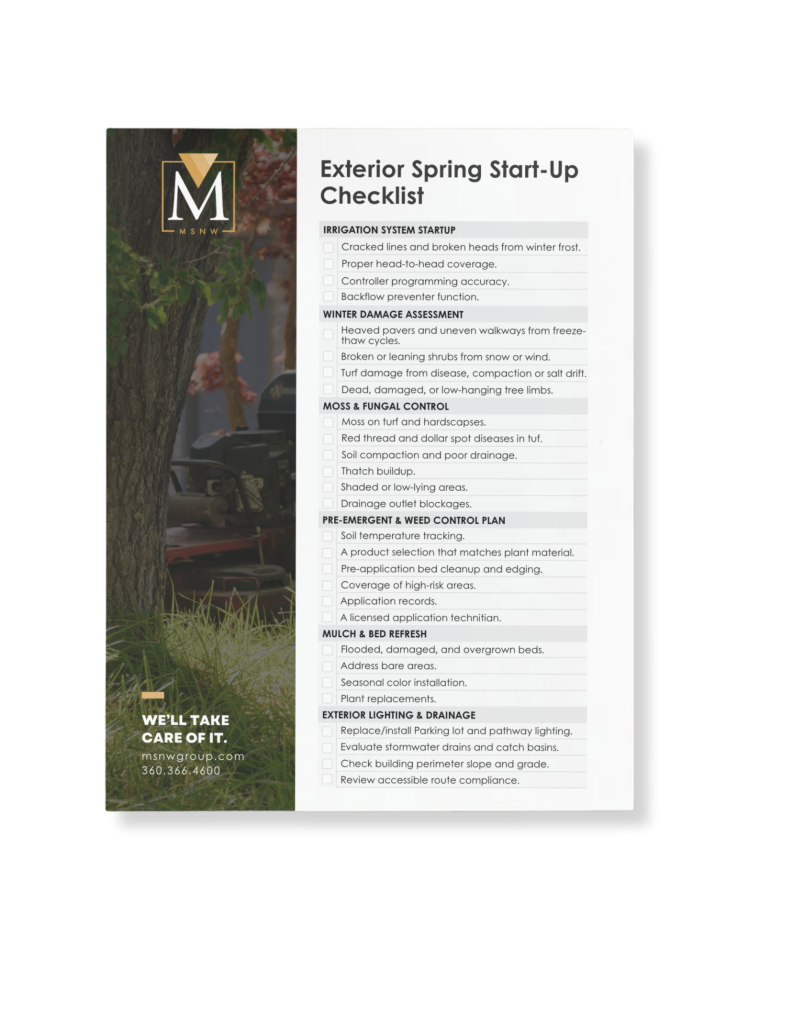

Spring tends to arrive quietly in the Pacific Northwest, bringing a little more rain and a little less frost. Suddenly, your property is showing every sign of a long winter.
For facility managers, early spring is the most important planning window of the year.
Miss it, and you spend the next four months playing catch-up. Getting ahead of the season helps your property look sharp, locks in your service vendors, and keeps your budget intact.
Let’s outline what to walk through before the growing season fully kicks off.
The PNW Growing Season
For Northwest Washington, the growing season typically starts in late April and continues through October:
Last frost: Typically around mid-April, though it can stretch into late April in cooler years.
Active growing season: May through September. This is when turf, annuals, and shrubs are putting on the most growth and require the most maintenance attention.
First fall frost: usually mid-to-late October.
For commercial landscapes, the practical spring start-up window is late March through April. Irrigation systems turn on, pre-emergent applications are scheduled, and the first mowing cycles of the season are completed.
Refreshing Your Exterior Landscape
Winter takes a toll on your landscape. Getting it back in shape during early spring, before the growing season accelerates, is far easier and less expensive than trying to catch up in June.
Irrigation System Startup
This is the most time-sensitive item on the list. In the Pacific Northwest, irrigation systems typically come back online in late March through April.
Before your system runs its first full cycle, have a qualified technician:
- Inspect for cracked lines and broken heads from winter frost
- Ensure proper head-to-head coverage
- Check on controller programming accuracy
- Review the backflow preventer function
A system running incorrectly from day one wastes water all season and can damage plantings before you ever notice.
Winter Damage Assessment
Walk your property, or better yet, walk your property with a landscape contractor. They will help you evaluate your site’s conditions, point out hazards or plant and turf health issues, and give you valuable solutions to get your property back in shape for spring.
Look out for:
- Heaved pavers and uneven walkways created by freeze-thaw cycles
- Broken or leaning shrubs from snow load or wind
- Turf damage from disease, compaction, or salt drift near parking areas and entryways
- Dead, damaged, or low-hanging tree limbs caused by severe weather
Catching structural hazards now will enhance your property’s safety and prevent future liability and unexpected costs.
Moss and Fungal Control
Washington’s wet spring conditions create the perfect storm for landscape problems that don’t show up on a generic maintenance checklist. Saturated soils, cool temperatures, and weeks of overcast skies set the stage for moss encroachment on turf and hardscapes, fungal turf diseases, and drainage failures that quietly damage your grounds.
This is one of the most commonly overlooked areas in commercial facility spring planning, and one of the more expensive issues to address once it’s visible. Preventative treatments applied in early spring will save your budget from mid-season remediation runs.
Ask your landscape contractor to assess and address:
- Moss on turf and hardscapes
- Red thread and dollar spot fungal diseases in turf
- Soil compaction and poor drainage
- Thatch buildup
- Shaded or low-lying areas
- Drainage outlet blockages
Pre-Emergent Weed Control
Pre-Emergent Weed Control Timing matters more than almost anything else in spring landscape care, and this is where a lot of commercial properties quietly lose the season.
Pre-emergent herbicides work by preventing weed seeds from germinating, but they have to be in the ground before soil temperatures climb past roughly 55°F. In Western Washington, that window typically opens in mid-March and closes by early April.
Miss it, and reactive weed pulling becomes a line item that follows you all season long.
Confirm your landscape provider has a plan that includes:
- Soil temperature tracking
- A product selection that matches your plant material
- Pre-application bed cleanup and edging
- Coverage of high-risk areas
- Application records
- A licensed application technician
Mulch and Bed Refresh
Harsh winter weather breaks down mulch, leaving bare soil exposed and vulnerable to weed pressure. Spring mulch refresh, ideally 2-3 inches in planting beds, helps retain moisture, regulates soil temperature, and gives your property a clean, finished, and maintained look that makes strong first impressions on tenants and visitors.
A professional landscaper can help you address:
- Flooded, damaged, and overgrown bed
- Bare areas
- Seasonal color
- Plant replacements
Exterior Lighting and Drainage
Walkways and parking areas experience the most traffic on your property. Addressing these areas will not only improve the look of your facility’s exterior but will also enhance overall safety and functionality.
Check:
- Parking lot and pathway lighting outages
- Stormwater drains and catch basins for debris, leaves, and sediment buildup
- Downspout outlets and splash blocks directing away from the building foundation
- Slope and grade around the building perimeter
- Accessible route compliance
Spring precipitation is the heaviest of the year, and blocked drainage creates flooding, erosion, and slip hazards quickly. A clean, presentable, and prepared property will address these issues long before heavy rainfall.
How to Plan a Successful Spring Start-Up
One thing that separates proactive facility managers from reactive ones: they schedule a joint spring walkthrough with the landscape contractor before the season starts, not after the first complaint comes in.
If you are looking for a new vendor to manage your property’s exterior maintenance, look for a professional who is ready to meet you on-site.
A walkthrough takes about an hour to complete. It surfaces issues early, aligns service expectations, and gives vendors the chance to flag any winter impacts. It also creates a shared record of the property’s condition.
A successful spring startup includes:
- A scheduled property walk-through and a documented property condition baseline
- Detailed site maps highlighting service and problem areas
- Aligned service schedules
- A prioritized punch list – Including deferred winter repairs, damage, and items that need attention before peak season traffic picks up.
- Clear communication on seasonal add-ons
- A review of tenant or occupant complaints
- Budget alignment
If your current vendors aren’t proactively scheduling this kind of touchpoint with you, that’s worth noting. The best exterior service providers treat start-up and spring walkthroughs as a standard part of the client relationship.
Spring in Washington doesn’t wait for your personal calendar to catch up. The properties that look best in May are the ones whose facility teams act in March.
Already behind? There is still time to catch up! Contact MSNW today to schedule a property walkthrough with one of our landscape professionals.